
1.820.3345.33
Contact@TravelTourWP.com


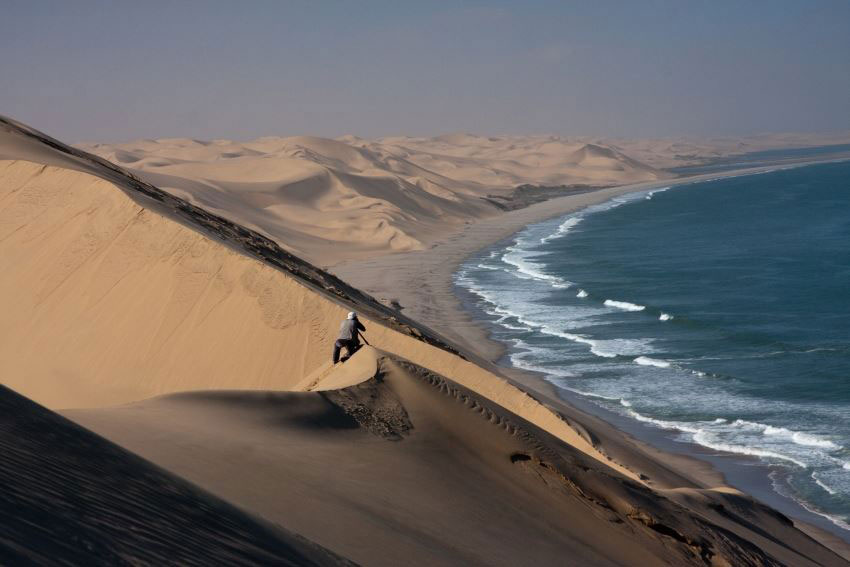
The Skeleton Coast forms part of the northern Atlantic Coast of Namibia. It starts in the South of Angola at the Kunene River and extends down south to the Swakop River. Namibian tribes refer to the area as “The Land God Made in Anger” while for the Portuguese sailors it gained the reputation for being “The Gates of Hell”. Dense, foreboding ocean fogs plague the area for much of the year and they have an annual rainfall of roughly 10 millimetres per annum. The beaches have a constant heavy surf, making a launch from the shore impossible but swimming is not part of this coast’s allure.
In 1971, the Skeleton Coast National Park was established in the northwest of Namibia, encompassing an area of 16 000 square kilometres. This area has many shipwrecks dotting the coastline, a remnant of a time when ships came too close to the shore.
But guests embarking on a Namibia tour will see more than just the unique landscape and shipwrecks, they will also catch sight of animals which have adapted to the climate. One of those animals is the desert lion.
Wildlife in a Wild Place
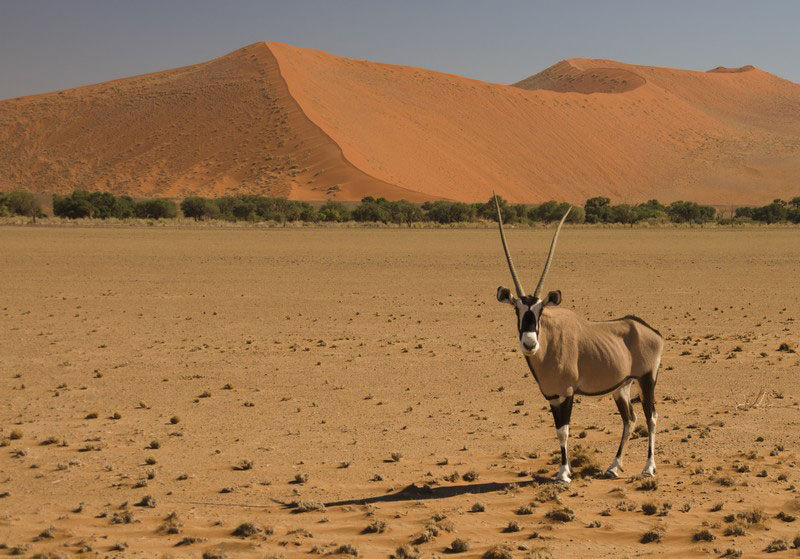
In spite of the aridity of the area, several animal species survive along this unforgiving stretch of land. Jackal, Gemsbok, Springbok, Hyena and Ostrich are just some of the animals living in the Skeleton Coast National Park. Animals rely on water provided by rivers that flow underground to keep them sustained, as most times it is the only water available. There are few freshwater springs in the area which create small pockets of refreshments for the animal in this harsh landscape.
It’s an experience of a lifetime to see a lion strolling along an abandoned stretch of coastline. Desert lions have adapted in these harsh conditions by taking most of the moisture they need from the prey they catch. This way they don’t have to search for water. In fact, these lions are capable of going for long periods of time with no water at all.
The area does not have an abundance of animals, and as such the lions often travel very long distances in order to catch their next meal. Unlike most lions, which would not waste their time catching the likes of mice or other smaller prey, these lions catch whatever they can in order to survive. Often when there is larger prey around, the desert lions will take great risks to catch them, usually fuelled by pure hunger after spending days surviving on small prey.
The days are extremely hot in this part of the world and during the heat of the day, lions will pant, while they will also sweat through their paws, to cool their bodies. In stark contrast, the nights get very cold and so they have slightly thicker coats than most African lions. Because they live in the desert, where there is mostly sand, they tend to have slightly longer legs that enable them to easily walk over the hot sand. Their constant search for food makes them travel long distances over sand dunes, scrublands and down to the beaches of the Skeleton Coast.
Skeleton Coast cubs mature much quicker than most regular lion cubs partly down to the fact that desert lions have to keep on the move on their search for food. They have been known to break away on their own between the ages of 14 to 20 months and establish their own territory. Taking a walk along the beach, it is not unusual to find lions spoor in the wet beach sand as lions go down to the water to catch seals.
Although the Skeleton Coast lions have been in the area since the 1930s, they were on the brink of extinction in the 1980s when their population dwindled down to just 20. It was then that the Desert Lion Conservation was established. After a dedicated effort on the part of the Organisation, the lion population has greatly increased over the last 30 years. The Desert Lion Conservation has spent many hours combing the area collecting ecological data, monitoring the lion’s movements and recording their demographics. Today most of the desert lions are collared. A tremendous effort was made in the managing of human/wildlife conflict, as humans accounted for the demise of many lions in the area. Ecotourism initiatives are in place today, which benefit not only the lions but the local community too.
Lions will be lions and hungry lions will kill anything. Lion Guardians were established to help the local community safeguard their livestock. Lion Guardians assist in the building and reinforcing of cattle kraals to keep the livestock safe at night when lions are most likely to hunt. Should cattle wander out in the dark, Lion Guardians will go out and find the cattle and safely return them to their kraal before the lions get to them. This system proved to be very successful in Kenya.