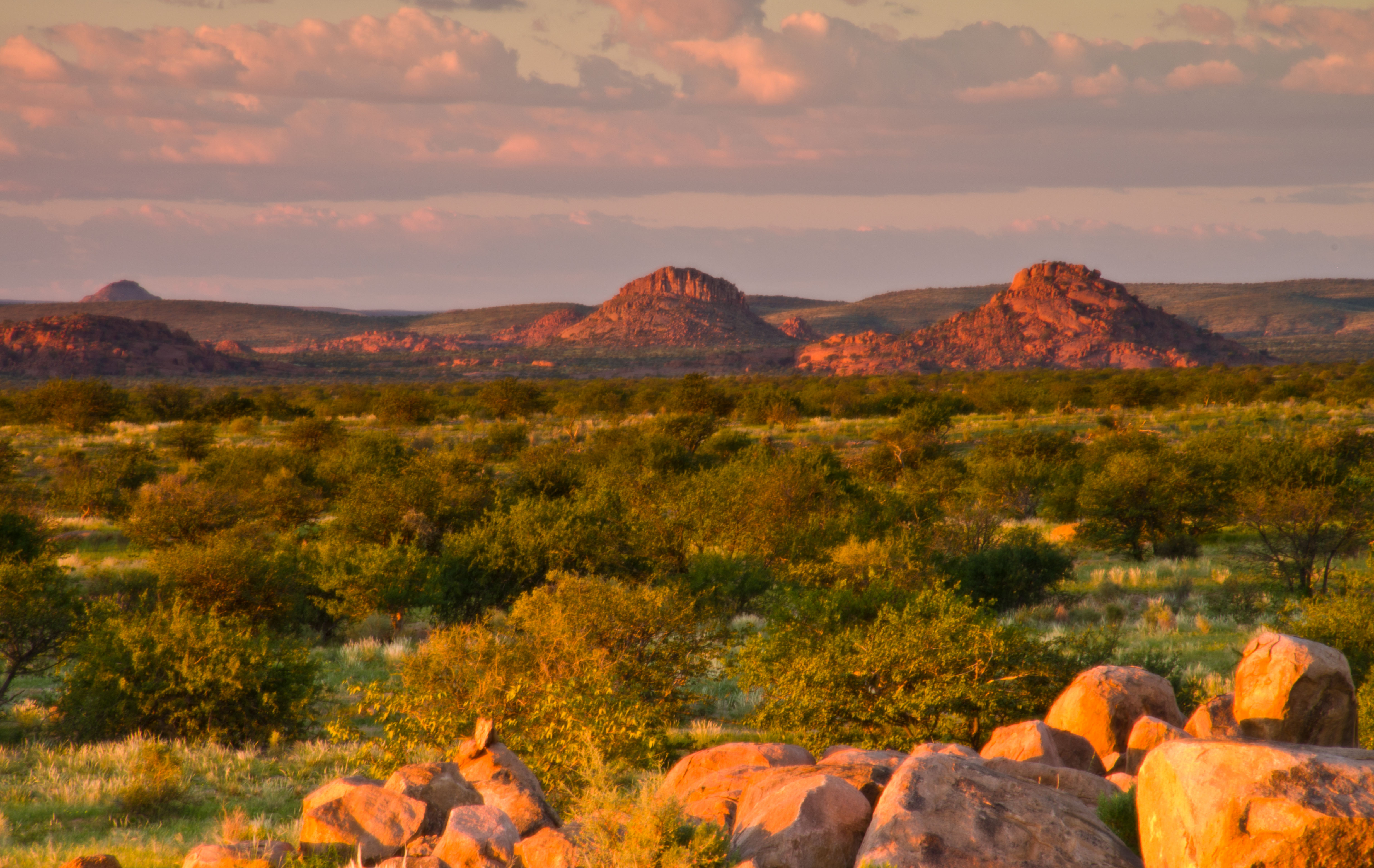
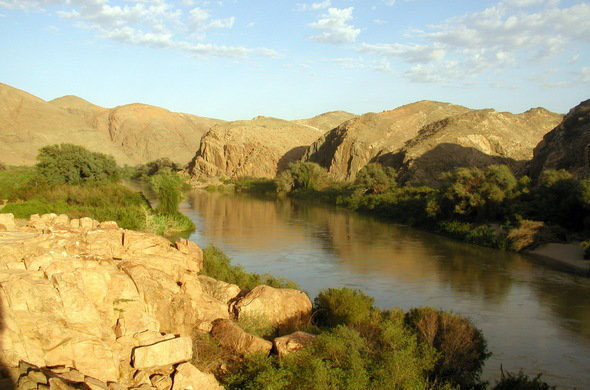
The beautiful Kaokoland. There is no place quite like it on earth. Namibia tours include a trip to Kaokoland and guests can look forward to a completely unique experience when they travel here.
Before you travel here, you might be interested in knowing a little bit about the place you will be visiting on you Namibia tour. Here are some of the highlights and important bits of must know information:
The Kunene River flows from the Angola highlands south to the border with Namibia and continues west all along the border, a distance of some 1050 kilometres, until it reaches the Atlantic sea. This unspoilt area of Namibia is known as the Kaokoland and requires a 4×4 vehicle to enjoy it as the distances in between the sites are great and the land consists of rugged rockiness. On top of that, the summer temperatures reach 50 degrees, thus making this area a real challenge to explore.
Kaokoland is a very mountainous area of Namibia. To the North are the Baynes Mountains, which are made from spectacular quartzite rocks reaching a height of 2040 meters. Far in the north-west part of the Kaokoveld, you will find the Otjihipa Mountains. The Otjihipa Mountains are the second highest range in the area. This wild rugged area of land is the home of many rare plants. To the east are the Hartmann Mountains, a wonderful place to experience a real 4×4 adventure.
“Kaoko” comes from the Herero word “Okaoko” which translates to “Left Arm” and refers to the position that Kaokoland is found in Namibia.
The Epupa Falls are part of the Kunene River and can be found close to the village of Epupa. In the Herero language, Epupa means “Foam”, as at the bottom of the falls the water foams. This spectacular waterfall plummets about 40 meters in some areas and is surrounded by coloured rock walls. Ruacana Falls are 120 meters high and 700 meters wide making them the most spectacular falls in this area. These falls are at their best during the months of February and May, after the rainy season and can resemble a little Victoria Falls.
Desert-adapted Elephant can be found in the Kaokoland. They are not a subspecies but do look different from other elephants. They have physical and behavioural differences because of the extremely arid area in which they live. Here the annual rainfall is less than 150mm a year so they regularly have to survive on minimal water, sometimes only drinking water every two to three days whereas other elephants drink daily. These elephants also do not demolish trees by stripping the bark off or knocking them over. Their feet also look different from other elephant having a broader foot for the vast distances they have to cover over sandy terrain.
Throughout the Kaokoland you will see remote Himba settlements. Himba people are one of the last semi-nomadic desert dwellers. They originate from the Herero people that inhabited these arid areas of Namibia. Their homesteads are unmistakeable, consisting of dome-shaped shelters that are positioned around a central enclosure for their animals. The women have kept their traditional appearance, with their skins coloured with red ochre, fat and aromatic resin. This is partly a beauty treatment and partly protection against the harsh desert environment.
The area around the Kunene River is the most photographic and you will find it difficult to not take a unique photo. It is not a monotonous area to travel through and over every horizon, there will be another breathtaking view.
Kaokoland is an ever-changing spectacle with gravel plains, rocky chasms, high mountains and dune fields that stretch down to the Atlantic. Book your Namibia tour and see this majestic land.